Mindful Creativity Begins with Paying Attention
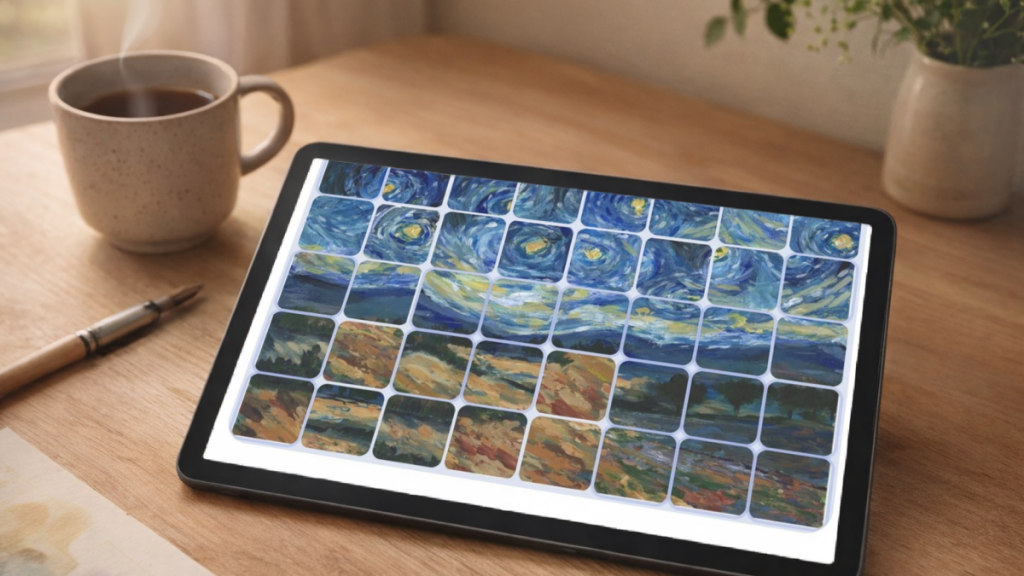
Art puzzles for relaxation have become one of my favorite ways to slow down and reconnect with creativity. There are days when I sit down to paint with a clear plan, and there are days when my mind feels like it is moving in a dozen different directions at once.
What has surprised me recently is how often I find that same sense of calm not only while painting, but while working through one of my own digital art puzzles. The experience is different from creating a painting, yet it offers many of the same benefits. It slows my thoughts, narrows my focus, and helps me become fully present in the moment.
That connection between art puzzles, relaxation, and mindful creativity is something I never expected when I first began turning my original paintings into online puzzles. Yet the more I explore them, the more I realize they offer a simple way to step away from distractions and reconnect with both art and ourselves.
Quick Answer: Why Do Art Puzzles Feel Like Meditation?
Art puzzles feel like meditation because they encourage focused attention, reduce mental clutter, and keep you engaged in a single activity. As you search for colors, shapes, and patterns, your mind naturally slows down, creating a calm state similar to mindfulness practices while deepening your appreciation for artwork.
Table of Contents
How Art Puzzles for Relaxation Support Mindful Creativity
Many people discover that art puzzles for relaxation offer more than simple entertainment. They create a quiet space where we can slow down, focus on the present moment, and engage with artwork in a deeper way. As we search for colors, shapes, and patterns, our attention shifts away from daily stress and toward mindful observation.
Many people think creativity is about producing something.
Painting a picture.
Writing a story.
Designing a project.
But creativity can also be about noticing.
Mindful creativity happens when we become fully engaged with what is in front of us. Instead of rushing toward a finished result, we pay attention to colors, textures, relationships, and details.
That is one reason art puzzles are so effective.
Unlike scrolling through social media or quickly glancing at an image, a puzzle asks us to stay with the artwork longer. We begin to notice things we might otherwise overlook.
A soft transition between colors.
A subtle reflection in water.
A brushstroke hidden inside a flower petal.
The artwork slowly reveals itself piece by piece.
How Art Puzzles Encourage Presence
One of the biggest challenges today is distraction.
Notifications arrive constantly.
Our attention shifts from one task to another.
Researchers and mindfulness practitioners have long recognized the benefits of focused attention and present-moment awareness. Resources such as Mindful.org offer practical insights into how mindfulness can help reduce stress and improve overall well-being.
Even when looking at artwork, we often spend only a few seconds before moving on.
Art puzzles create a different experience.
When solving a puzzle, there is only one task:
Find the next piece.
That simple goal creates focus.
Without realizing it, you begin to enter a state often described as “flow.” Your attention settles into the activity. The outside world becomes quieter.
This is similar to what many people experience during meditation.
The difference is that art puzzles provide a visual and creative pathway into that same state of calm concentration.
This is one reason why art puzzles for relaxation have become a popular activity for people seeking calm, focus, and a creative break from busy schedules.
If you’ve enjoyed exploring how puzzles can strengthen artistic skills, you may also enjoy reading How Art Puzzles Improve Your Painting Skills:
Why Slowing Down Matters
Modern life rewards speed.
We skim.
We scroll.
We multitask.
Yet some experiences become richer when we slow down.
Art is one of them.
Many paintings contain dozens or even hundreds of intentional decisions. Color choices. Composition adjustments. Layered brushwork. Small details placed to guide the viewer’s eye.
When we rush, we miss much of that effort.
Art puzzles naturally encourage a slower pace.
As each piece falls into place, the image develops gradually. Instead of seeing the finished painting immediately, you discover it over time.
This slower process often creates a stronger emotional connection to the artwork itself.
It also makes the experience surprisingly relaxing.
Unlike many forms of entertainment that encourage speed and constant stimulation, art puzzles for relaxation reward patience and careful observation.
My Experience Seeing My Own Art Differently
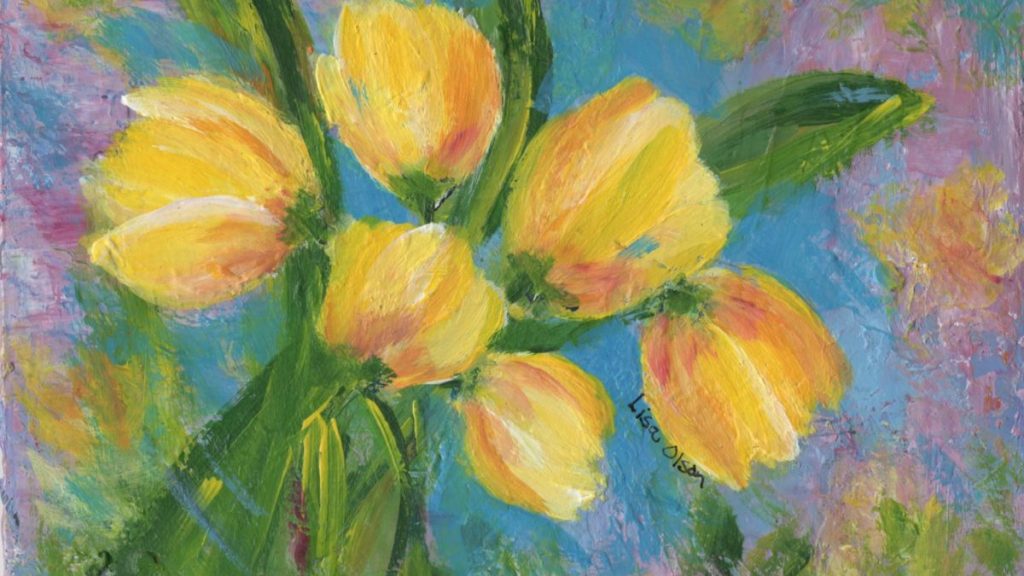
One of the most unexpected discoveries came when I solved a puzzle created from one of my own paintings.
You would think the artist already knows every detail.
I certainly thought I did.
But while working through the puzzle, I noticed relationships I had forgotten.
In one floral painting, I became aware of how a small patch of purple connected several sections of the composition. The color wasn’t dominant, yet it quietly tied the entire painting together.
I also found myself studying brushwork I had created months earlier. Some strokes that felt insignificant during painting became important visual anchors during the puzzle-solving process.
Even composition felt different.
By rebuilding the image piece by piece, I could see how the eye naturally traveled across the painting.
The experience reminded me that art often contains more than we initially realize—even for the person who painted it.
That lesson has influenced how I approach new paintings today.
The Connection Between Observation and Creativity
Observation is one of the most important creative skills.
Whether you paint, draw, quilt, photograph, or simply enjoy looking at art, observation helps you see relationships that others might miss.
Art puzzles strengthen this skill naturally.
Looking Beyond the Obvious
When solving a puzzle, you learn to notice:
- Color temperature changes
- Shape relationships
- Light and shadow patterns
- Repeated visual elements
- Subtle texture variations
These same observation skills support creativity in many other areas.
The more carefully we learn to see, the more creative possibilities we discover.
This idea connects closely with another article in this series, Why Art Puzzles Help You See More in Paintings:
Practical Ways to Use Art Puzzles Mindfully
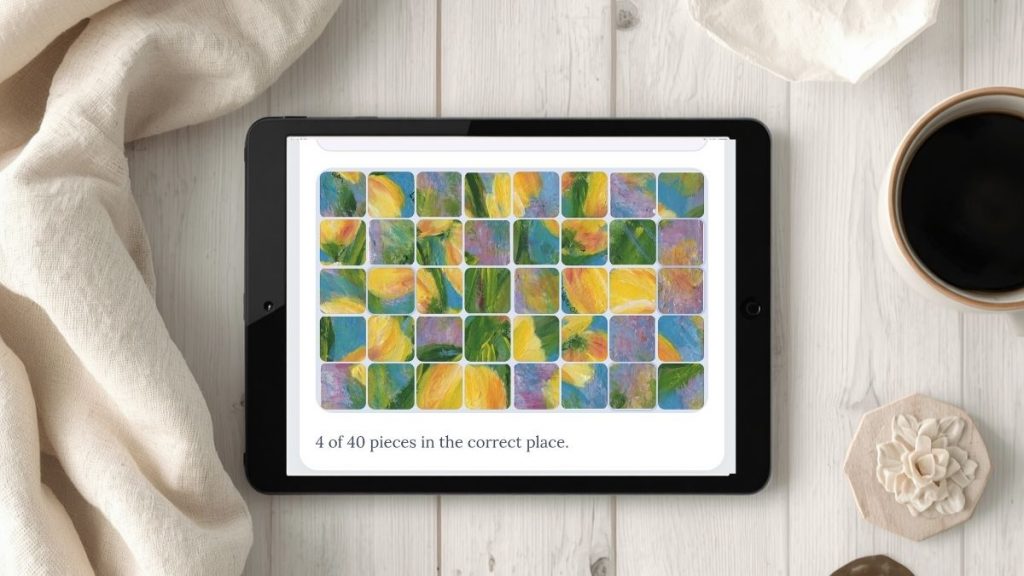
You do not need a special routine to enjoy the benefits of mindful creativity.
Try one of these simple approaches:
Set Aside Ten Quiet Minutes
Instead of reaching for your phone, spend ten minutes working on a puzzle.
Notice how your focus changes.
Pay Attention to Color
Look for subtle color relationships as you solve.
Ask yourself why certain colors feel harmonious.
Observe Your Attention
Notice when your mind wanders.
Gently bring it back to the puzzle.
Enjoy the Process
Resist the urge to finish quickly.
Allow yourself to enjoy the gradual unfolding of the artwork.
Whether you spend five minutes or an hour, art puzzles for relaxation can become a simple daily habit that supports creativity and mindfulness.
For a relaxing experience, you might enjoy exploring the Flower Bouquet Puzzle, the Yellow Tulips Puzzle, or the Monet Water Garden Puzzle.
Each offers a different opportunity to slow down and appreciate color, composition, and artistic detail.
Frequently Asked Questions
Are art puzzles good for your brain?
Yes. Art puzzles engage visual processing, concentration, memory, and problem-solving skills. They encourage active observation while providing a mentally stimulating activity that many people find both relaxing and rewarding.
Are art puzzles for relaxation effective for reducing stress?
Many people find that puzzles reduce stress because they focus attention on a single task. This concentrated activity can quiet mental distractions and create a calming, meditative experience.
Why do puzzles feel relaxing?
Puzzles provide a clear objective and immediate feedback. As pieces connect, the brain experiences small moments of accomplishment that help create a sense of progress and satisfaction.
Do puzzles improve creativity?
Puzzles can support creativity by strengthening observation skills, pattern recognition, and visual awareness. These abilities often transfer into artistic and creative pursuits.
How can artists improve observation skills?
Artists can improve observation by studying artwork carefully, sketching from life, comparing color relationships, and solving art puzzles that require attention to detail and composition.
Final Thoughts
One of the greatest gifts art offers is the ability to slow us down. One of the reasons I continue creating art puzzles for relaxation is because they remind me that creativity doesn’t always have to be productive to be meaningful.
Not every creative experience needs to produce something new. Sometimes the value comes from paying closer attention to what already exists.
That is why I continue to enjoy creating and solving digital art puzzles based on my paintings.
They remind me to look longer.
Notice more.
Appreciate details.
And most importantly, spend a few quiet moments fully present with art.
If you’re looking for a simple way to experience a little more mindful creativity in your day, consider trying one of the art puzzles on SmallTownArtist.com. You might discover that the process feels a lot like meditation—one piece at a time.