Have you ever felt stuck in your painting?
Art puzzles offer a simple and approachable way to strengthen observation, creativity, and painting skills.
Maybe you’re unsure where to start.
Maybe your colors don’t look quite right.
Or maybe you feel like you’re missing something—but you can’t quite figure out what it is.
It’s a common experience, especially when you’re learning.
And often, the challenge isn’t about talent or technique.
It’s about learning how to truly see.
Art puzzles offer a simple and approachable way to build that skill.
How Art Puzzles Help You See More in Paintings
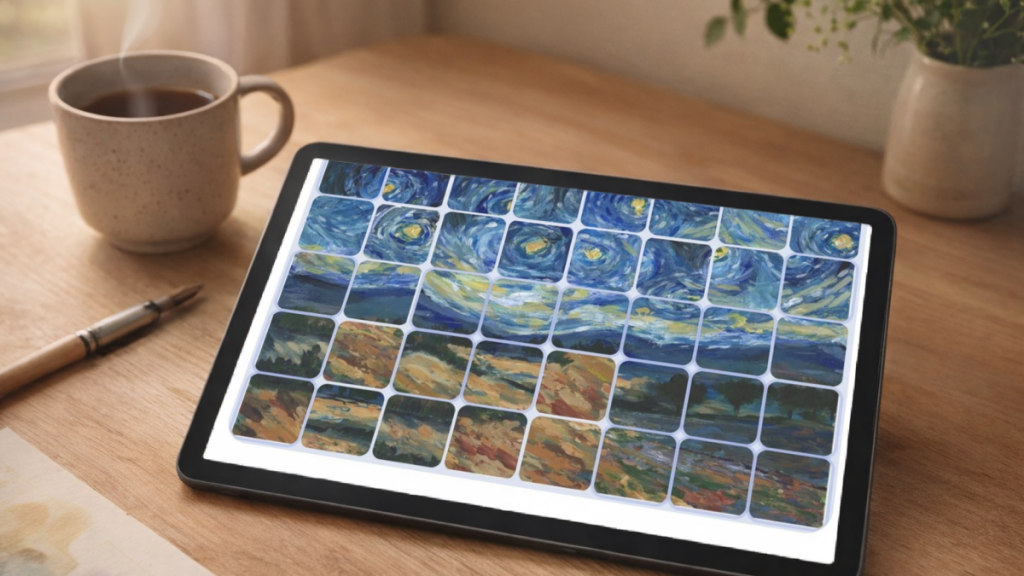
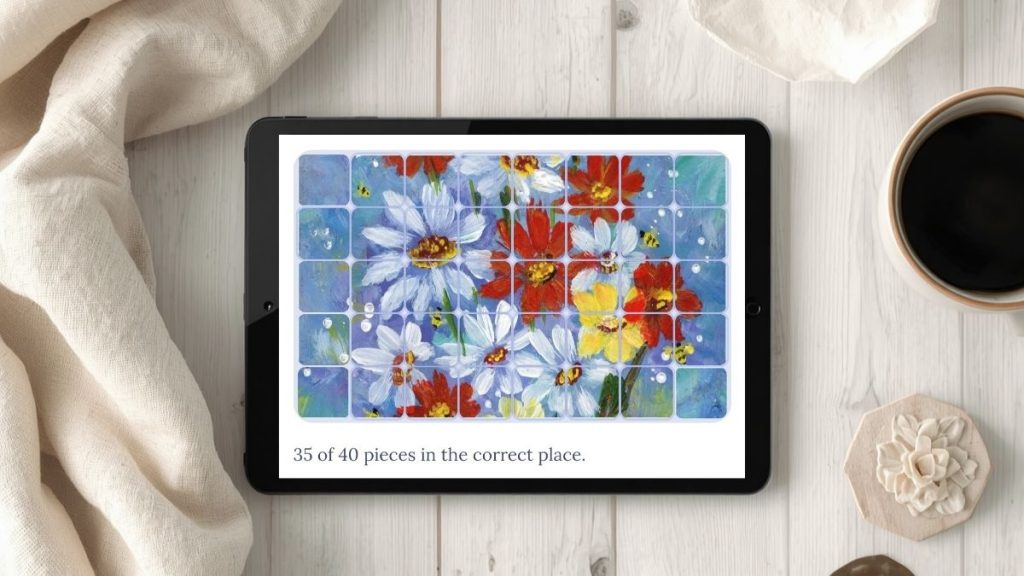
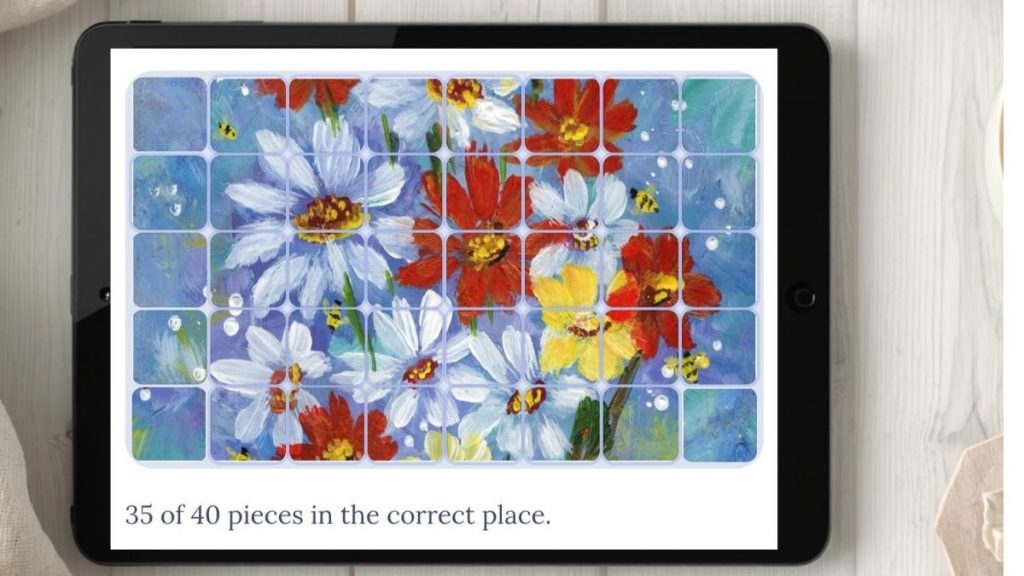
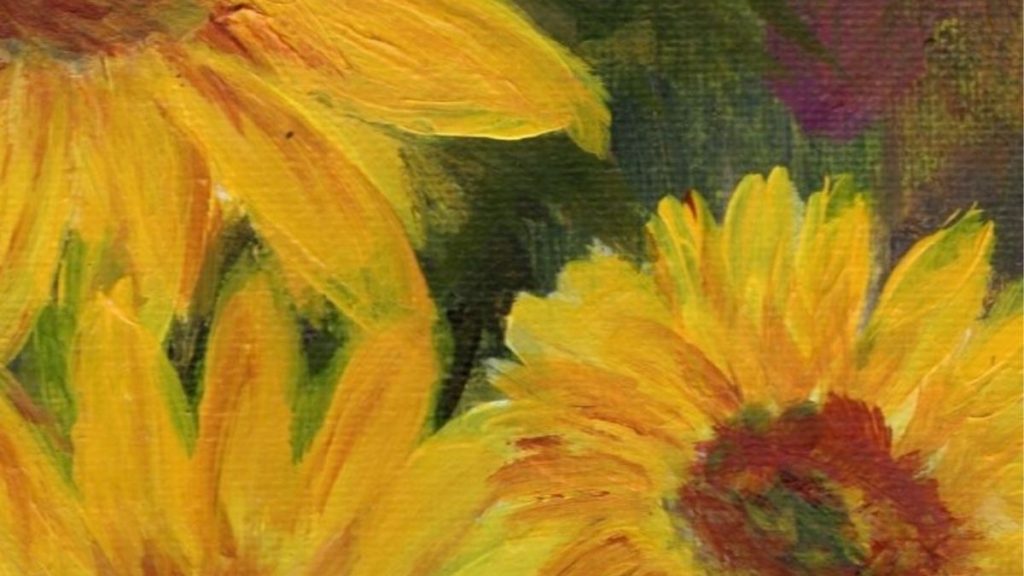
When you sit down to work through art puzzles, your focus naturally shifts away from the finished image and toward the smaller details within it.
You begin to notice:
- Subtle changes in color
- The direction of brushstrokes
- The way shapes connect across a composition
Instead of guessing what a painting looks like, you start to understand how it’s built.
Why Observation Is the Foundation of Painting
Before brushwork, before color mixing, before composition—there is observation.
Strong painting skills come from the ability to notice:
- How light and shadow interact
- Where colors shift and blend
- How edges soften or sharpen
Art puzzles slow this process down.
They remove the pressure of “creating” and replace it with quiet observation.
And that’s where real growth begins.
From Art Puzzles to Your Own Painting
One of the most valuable things about art puzzles is how naturally they translate into your own work.
As you spend time solving them, you start to internalize patterns:
- You recognize color relationships more easily
- You begin to see structure in compositions
- You gain confidence in breaking complex images into simple parts
I explored this idea further in my earlier blog post about how art puzzles change the way we see paintings.
Without realizing it, you’re building the same skills you use when you paint.
A Simple Practice to Try
If you’d like to use art puzzles to support your painting, try this:
- Choose a puzzle that draws your attention
- Work through a section slowly, focusing on color and shape
- Once completed, take a small part of the image
- Try painting just that section on your own
This removes overwhelm and helps you focus on one area at a time.
It’s a simple way to build confidence and improve your painting skills step by step.
A Calm Way to Practice Creativity
You don’t have to be an experienced artist for this to work.
Art puzzles create a low-pressure environment where you can learn without expectation.
They offer a calm and focused way to engage with creativity, helping you build skills over time.
Research shows that mindfulness-based activities can help reduce stress and support overall mental well-being, reinforcing the value of slowing down through creative experiences.
Explore Art Puzzles for Yourself
If you’d like to experience this for yourself, you can explore my collection of interactive art puzzles here at SmallTownArtist.com.
Start with one.
Take your time.
Notice what changes.
You might be surprised by how much more you begin to see when using art puzzles.
A Creative Habit Worth Returning To
One of the most meaningful things about art puzzles is that they encourage us to slow down and return to creativity without pressure. Even spending a few quiet minutes focusing on color, shape, and brushwork can help strengthen observation and creative confidence over time.
Like painting itself, improvement often happens gradually—one small piece at a time.
Final Thought
Improving your painting doesn’t always come from doing more.
Sometimes, it comes from slowing down.
From looking more closely.
And from discovering new ways to experience the art you love.