A Reflection on Creative Courage and Trusting Your Own Eye
Recently, I had the opportunity to visit an art studio space in a four-story building filled with working artists. Each floor held something different — painters, mixed media artists, sculptors — all renting space and creating in their own unique way.
Many of the studios were beautifully arranged, almost like private galleries. Clean white walls. Framed work. Carefully curated displays. It would have been easy to walk through and begin comparing — technique, subject matter, pricing, presentation.
But I didn’t.
I noticed something quietly powerful.
I wasn’t comparing myself to them.
I simply observed.
I appreciated.
And then I went back to thinking about what I like to paint.
I Paint What I Like to Paint
Sometimes I paint in watercolor.
Sometimes in acrylic.
Other times in mixed media.
I move between them depending on what the subject calls for — or what I’m feeling that day.
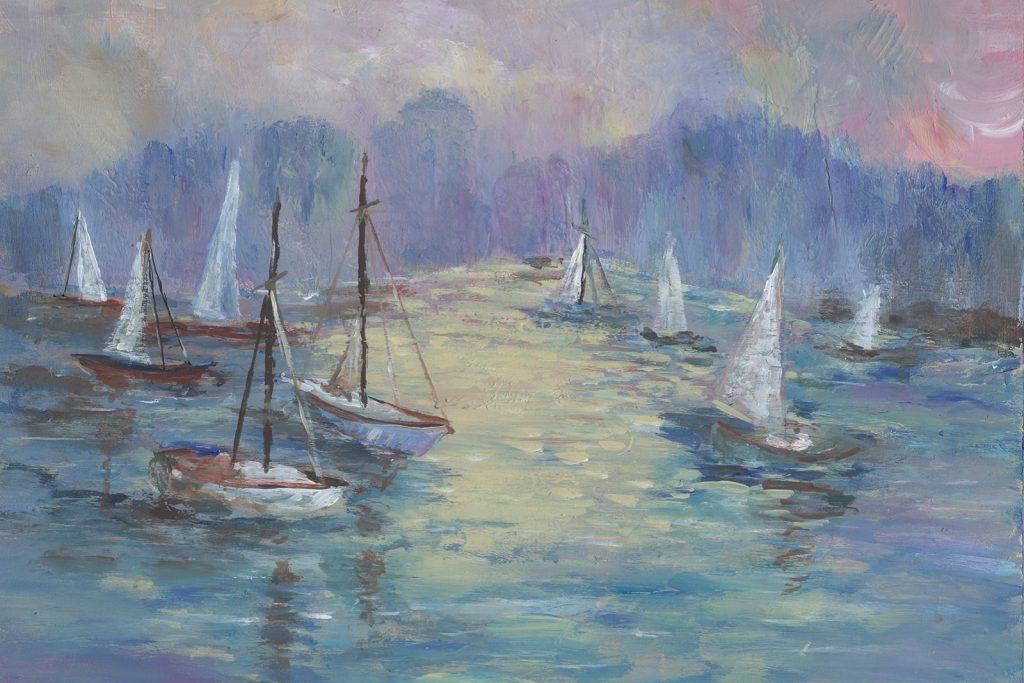
This sailboat painting was one of those moments. Soft layers. Reflections. Movement. Atmosphere. Light dissolving into water.
There was no strategy behind it.
No “Will this sell?” question.
Just paint. And the desire to create something that felt calm and expansive.
Monet Did the Same
One of the reasons I admire Claude Monet — and why I created a full art history series about him on my Calm Art Studio YouTube channel — is because he chose his own direction.
He stepped away from convention.
He painted what he wanted.
How he wanted.
Even when it wasn’t commercially accepted.
He painted light.
He painted atmosphere.
He painted feeling.
If you’d like to explore more about Monet’s artistic courage and evolution, you can watch the full series here:
👉 Watch the Claude Monet Series on Calm Art Studio →
(Each episode is slow, reflective, and designed for relaxation, rest, and sleep.)
Monet reminds me that artistic growth often means trusting your own eye — not the marketplace.
It’s a lesson I’ve been slowly learning over time — much like I shared in a previous reflection about becoming an artist by simply showing up.
When You Paint to Suit Yourself
When I paint to suit myself, something interesting happens.
Sometimes people love it.
Sometimes they don’t.
Sometimes it sells immediately.
Sometimes it sits.
And it’s all okay.
Because the painting was honest.
And honest work has value — whether that value is financial, emotional, or personal.
My First Art Critic
My mom was one of my biggest champions.
She was the first person I would show my paintings to.
I knew what she liked. I knew what she didn’t.
If I showed her something more abstract, she might pause and say:
“Interesting.”
Or…
“I don’t know about that one.”
And I would laugh and respond,
“Well… I didn’t paint it for you.”
And we’d both smile.
Because it was true.
I didn’t paint it for her.
I didn’t paint it for a studio building.
I didn’t paint it for a gallery.
I painted it because I wanted to.
And that freedom — that quiet, confident freedom — is something I’m learning to protect.
The Freedom to Create
Walking through that four-story building reminded me:
There is room for all of us.
Room for clean gallery walls.
Room for experimental mixed media.
Room for watercolor.
Room for acrylic.
Room for abstraction.
Room for softness.
And room for sailboats drifting across luminous water.
We don’t have to paint like anyone else in the building.
We just have to paint like ourselves.
And sometimes — that is exactly what people are looking for.