Being a self-taught artist means learning through curiosity, experimentation, and years of practice rather than formal art school training.
Many people believe that artists must attend art school to learn how to paint.
But many painters discover their voice through years of experimentation, curiosity, and practice.
I’m one of those artists.
One of the questions I’m asked most often when teaching art classes or sharing my paintings on social media is:
“Where did you study art?”
People are often surprised when I answer:
I’m a self-taught artist.
But that phrase can mean different things to different people, which often leads to the next question:
What does being a self-taught artist actually mean?
What Is a Self-Taught Artist?
A self-taught artist is someone who learns to create art primarily through personal practice, experimentation, and independent study rather than formal training at an art school. Many self-taught artists develop their skills by observing other artists, studying techniques, and painting regularly over many years.
Can You Become an Artist Without Art School?
Many people assume that becoming an artist requires formal training.
While art school can be valuable, many artists develop their skills through practice, observation, experimentation, and years of painting.
Some of the most well-known artists in history were largely self-taught or developed their style outside of traditional academic training.
Learning to Paint Without Art School
Many people assume artists must go to art school to learn how to paint. While formal training can be wonderful, it isn’t the only path.
Over the years, my learning has come from many different sources:
• A large collection of art instruction books
• Watching painting demonstrations and tutorials
• Studying the work of great artists
• Experimenting with my own paintings
• Practicing over and over again
I’ve spent many hours watching artists paint on YouTube, reading art books, and studying techniques. Those resources helped me understand the basics.
But there is one important truth about learning art.
Watching someone paint does not make you a painter.
Painting Is a Skill That Comes From Practice
Learning to paint is a lot like learning to play the piano.
You can watch someone perform a beautiful piece of music, but until your fingers touch the keys and you practice regularly, you won’t become a pianist.
Painting works the same way.
You have to:
• pick up the brush
• mix the paint
• try new techniques
• make mistakes
• paint again the next day
Over time, something wonderful begins to happen.
You start to understand how paint behaves.
Watercolor flows differently across paper. Acrylic paint layers differently on canvas. Colors begin to interact in ways that become more familiar with practice.
Learning to Mix Color Through Experimentation
One question I often hear from students is:
“How do you mix your colors?”
I know the basics of color theory, but much of my process comes from simply experimenting.
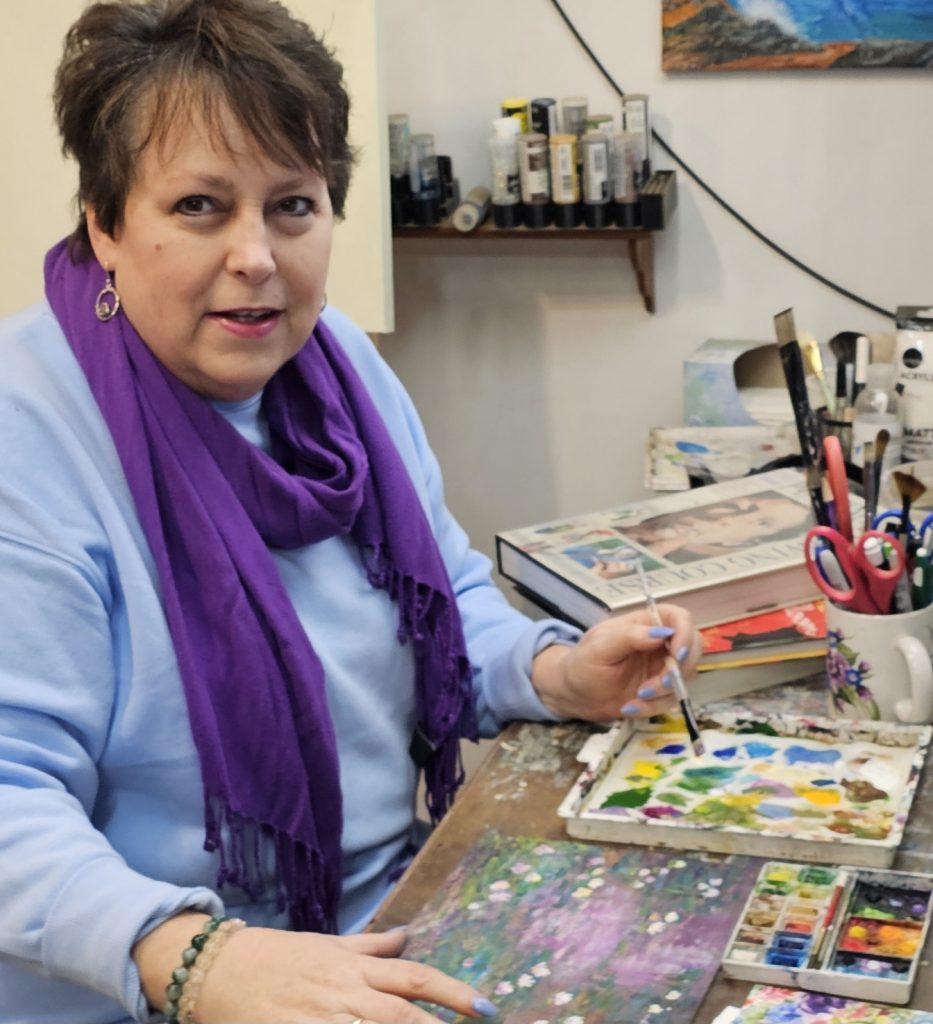
I like to mix colors directly on my palette and sometimes even on the paper or canvas.
There is definitely uncertainty in working this way. Sometimes the color isn’t exactly what I expected.
But after painting this way for more than 20 years, experimentation has become part of my style.
Trying things is how I learn.
Studying Great Artists as Teachers
Another important part of being a self-taught artist is studying the work of artists who came before us.
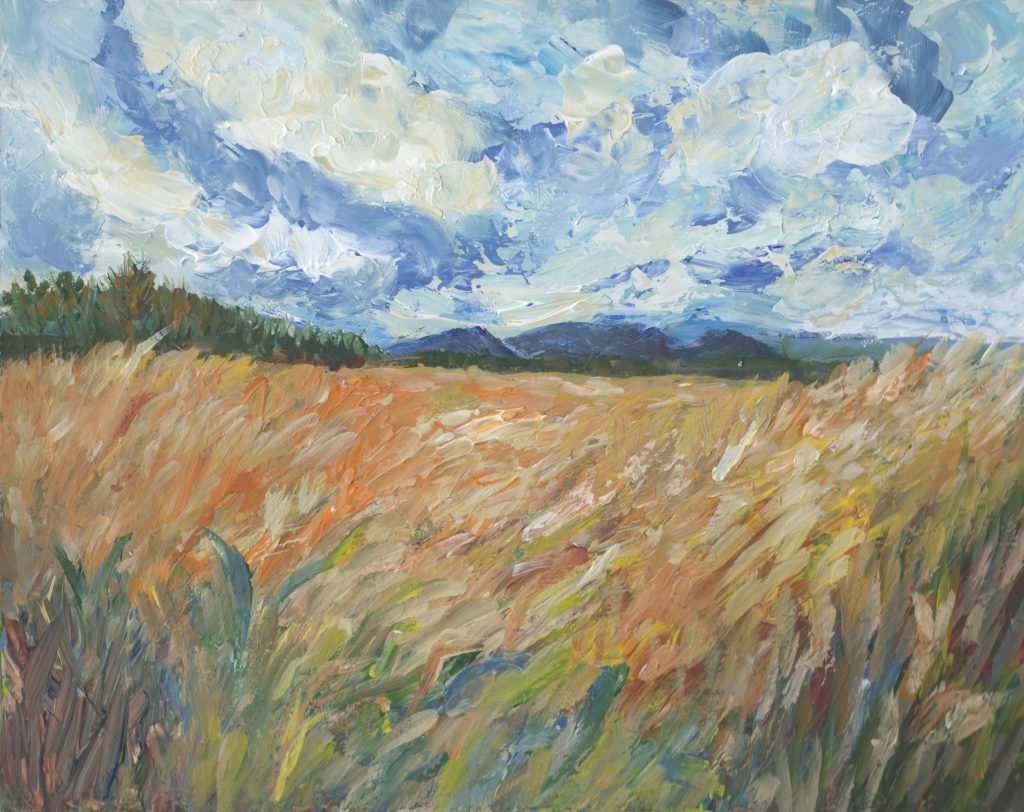
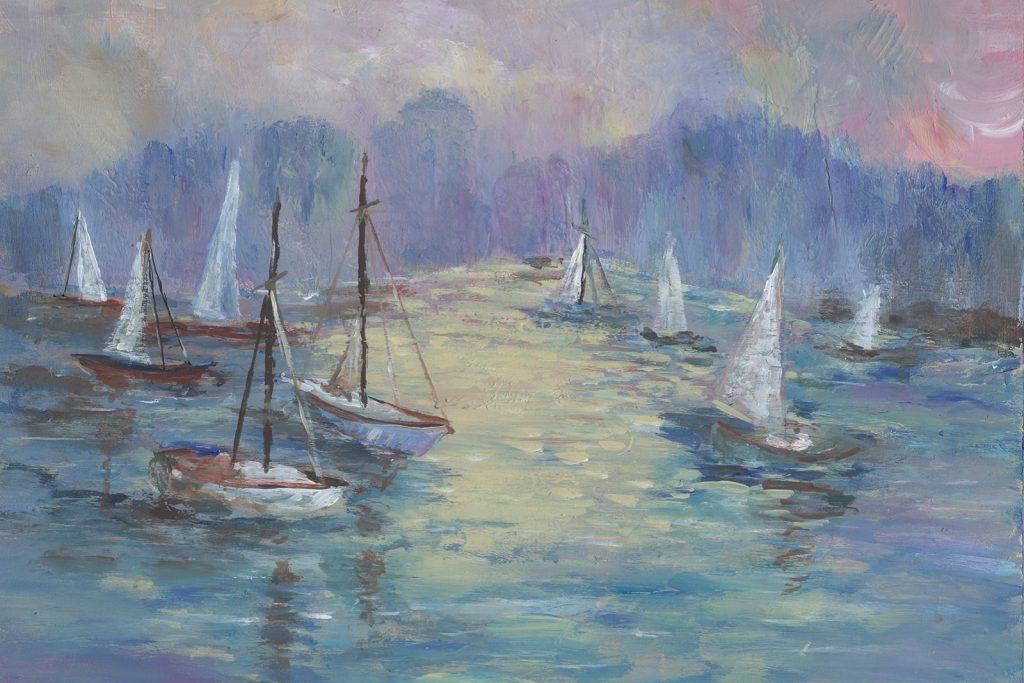
When I paint in the spirit of artists like Claude Monet or Vincent van Gogh, I’m not trying to copy them exactly. Instead, I’m exploring how they approached painting. Studying artists like Monet and van Gogh has influenced many of the paintings I create today at Small Town Artist.
Questions I often ask myself include:
• How did they use color?
• How did they capture light?
• What kinds of brushstrokes did they use?
• How did they simplify shapes in nature?
Exploring the styles of artists like Monet and van Gogh helps me continue learning, even today.
In many ways, these artists become teachers across time.
The “Someday” Question About Formal Training
Over the years I have told myself many times that someday I might pursue formal art training.
Life has a way of filling our calendars with responsibilities, projects, and priorities. Years pass quickly.
In the meantime, I keep painting.
I keep experimenting.
I keep learning.
And slowly, over time, those hours of practice add up.
Embracing the Identity of a Self-Taught Artist
At some point I realized something important.
Being self-taught is not something to apologize for.
It simply describes the path I took.
My learning has come from curiosity, practice, experimentation, and many hours in my studio with a brush in hand.
So when people ask about my training, I’m happy to answer:
“I’m a self-taught artist.”
And in many ways, I still am.
Because every painting teaches me something new, whether I’m working on a watercolor landscape or a new piece for my Small Town Artist collection.
Learning Through Observation and Quiet Study
One of the ways I continue to grow as an artist is through quiet observation.
Studying paintings slowly, noticing color relationships, brushwork, and composition can be incredibly powerful.
This idea of slow observation and learning from artists across time is something that inspired me to create my Calm Art Studio video series.
In Calm Art Studio, I explore the lives and styles of artists like van Gogh and Monet, pairing storytelling with the quiet experience of watching paintings unfold.
It’s a gentle reminder that art doesn’t always need to be rushed. Sometimes the best learning happens slowly—through observation, curiosity, and a willingness to keep practicing.
The Journey Continues
Being self-taught doesn’t mean the learning stops.
Every painting still teaches me something new.
Each brushstroke is another small step forward.
If you enjoy learning about art and painting techniques, you may also enjoy exploring the artwork and creative projects at Small Town Artist or watching the relaxing storytelling series at Calm Art Studio video series, where I explore the lives and styles of artists like Monet and van Gogh through relaxing storytelling and painting demonstrations.